
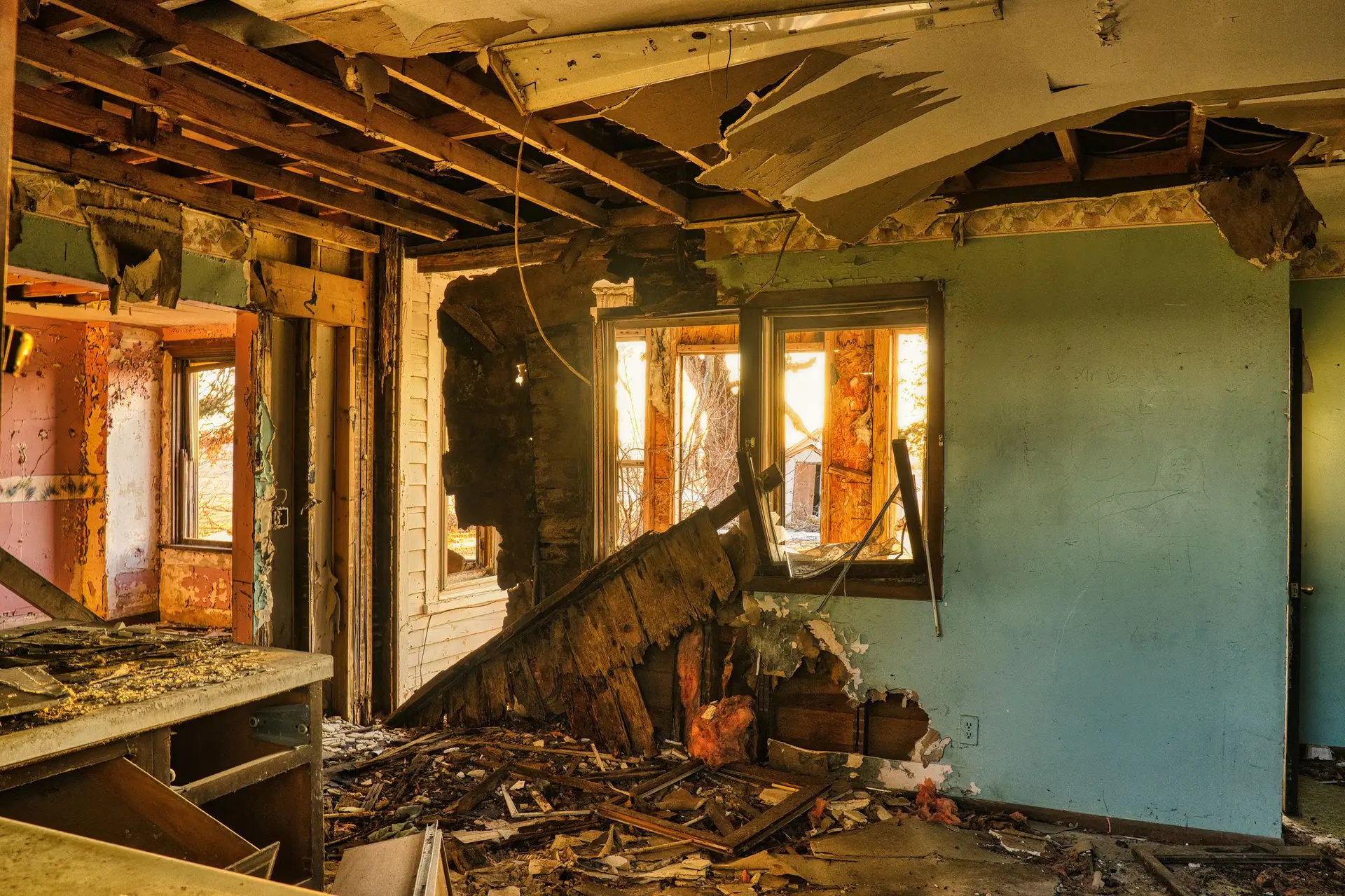
When a fire scorches part of a house but leaves it standing, the owner needs a fire damage repair contractor who can tell what is sound and what is not. In Pasadena that call can follow a wildfire nearby, or a kitchen or garage fire that pushed smoke through every room. From the street the house looks repairable. The real question is how far the heat and the smoke went.
Fernhill Builders works from Pasadena, and damaged and fire-exposed houses are the core of our work. This post covers what we price on a damaged house, what can change the scope once things are opened up, and how our written quote is laid out so you can set it beside the adjuster's numbers.
For a number on your own house, the fastest start is a handful of photos: each damaged room, the attic hatch, the roof edge and the outside walls nearest the fire. Send them with the address and ask for a written repair quote, and we will reply about a visit.
Repair work on a house that is still standing
A repair job is not the same as building on a cleared lot. The frame, the foundation and most of the finishes are still there, and the aim is to keep as much of them as the damage allows. So the crew works room by room and layer by layer, taking out what failed and protecting what did not.
On a typical Pasadena repair, the list can include charred framing in an attic or wall, roof sheathing and roofing near the fire, drywall and insulation that soaked up smoke, windows with cracked glass or failed seals, and stucco or siding that blistered from radiant heat. Anything we replace on the outside goes back as a fire-resistant assembly, since Pasadena is in fire country and the next fire will test the same walls. Our fire repair and rebuild page covers the full range of that work.
What sets the price of fire damage repair
No two damaged houses price the same, and a figure per square foot means little until the walls are open. Four things decide most of the cost.
Structural damage found. Char on a rafter, a joist or a top plate changes the job. Light surface char may be cleaned and sealed. Deeper char means the member is sistered or swapped out, and that can bring shoring, an engineer and a permit into the job. None of this can be judged from the street, so the attic and any opened wall cavity are the first places we look.
How far the smoke and soot reached. Smoke keeps moving through ducts, wall cavities and the attic after the flames are out. A house where soot stayed in one room is a small cleaning and finish job. A house where it rode the return air system into the insulation needs duct work, insulation removal and sealing across many rooms.
The insurance scope. If a claim is open, the adjuster's estimate sets what the insurer expects to pay for. We read it line by line against what we find. Missing items, short quantities and lines written around a cheaper method all show up in our comparison, so you can take them back to the insurer.
Code upgrades. Once a wall, a roof section or a window is replaced, the new work has to meet the current code for the address. In fire country that can mean rated vents, tempered glazing and a noncombustible wall finish where the old house had none. We list these as their own lines, apart from the like-for-like repair.
Findings that change the scope
Some discoveries move a job from a patch to a larger repair. These are the ones we watch for, and the decisions each one puts in front of you:
- Char that runs past the visible burn. If heat traveled along the framing, the opening gets bigger before it gets smaller.
- Wet insulation and drywall from firefighting water. Water left inside a wall can grow mold, which adds removal and drying to the scope.
- Wiring near the burned area. The jacket on a wire can melt with no sign on the outlet cover. Affected runs are traced back to the panel.
- A roof that needs more than a patch. When the damaged section is large, a full reroof can be the cleaner choice over a tie-in, and it gives the whole house a rated roof.
- Stucco that sounds hollow. Heat can break the bond between the coats and the lath. Where that happens, a section of wall is stripped and rebuilt, and our stucco and exterior crew handles the layers.
Where a repair and a replacement are both reasonable, the quote shows both, and you choose.
How the visit and the written quote work
The visit starts outside. We walk the walls, the roof edge and the yard on the fire side, then go into the attic and through each room. Where we need to see inside a wall, we ask first and cut a small inspection hole. Photos go into the file as we go.
From the visit we write the quote by area: attic, roof, each room, each outside wall and the systems. Each line says what comes out, what goes back and which material is used. Code upgrades sit in their own section. If you have an adjuster's estimate, a short comparison sheet comes with the quote and marks every line where the two differ.
If the walk shows more damage than a repair can fix, we say so and talk through a rebuild. We still price the repair if that is the path you want.
What to have ready
A few things make the visit and the quote faster:
- The claim number and the adjuster's estimate, if you have them.
- Photos from the day of the fire or soon after, before cleanup moved anything.
- Any old plans, permits or a survey for the house.
- A list of what you want back the same and what you would change while the walls are open.
- Access to the attic and any crawlspace.
You do not need all of them before you reach out.
Start with a call or the form
If your house in Pasadena or a nearby city such as Altadena, South Pasadena or San Marino took heat or smoke damage, call us or send the form with the address and a few photos. We will set a time to walk the house and send a written repair quote you can compare line by line.