
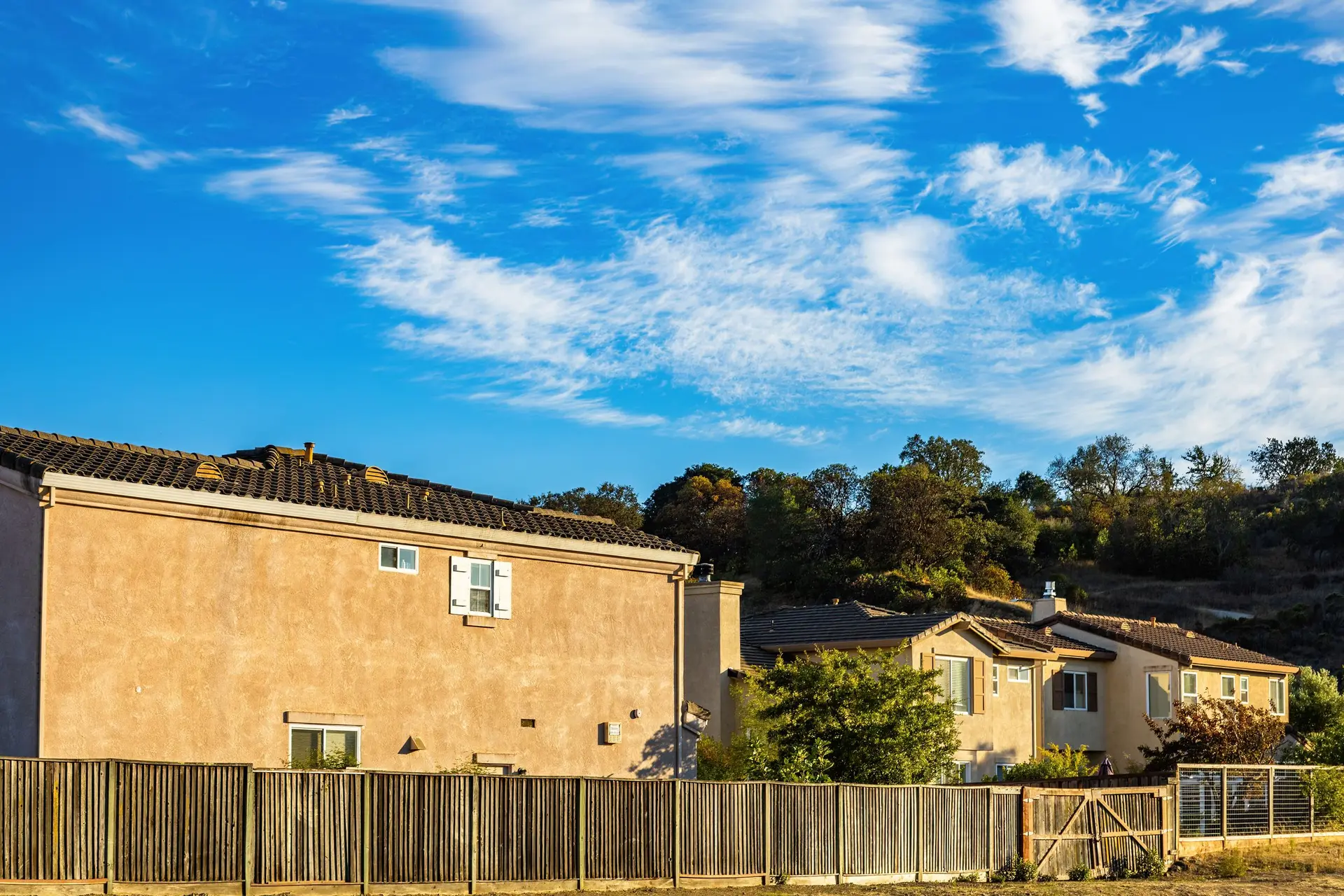
Stucco and Exterior Walls Built to Resist Fire
Fernhill rebuilds exterior walls in layers, from sheathing and building paper to the finish coat, and closes the weep screed, eaves and vents so embers find no way in behind the stucco or siding.
A wall is more than its finish coat
Cement plaster is noncombustible, which is why it suits fire country. What lets a stucco wall fail can be somewhere else: an open gap at the foundation line, a vent with a coarse screen, wood trim that touches the ground, or cracks that let water rot the framing behind. We look at the whole wall before we scope the coat on top.
Repair, re-stucco or new siding
Small cracks and patches can be repaired and blended. Where the paper behind the stucco has failed, the right fix is to strip to the sheathing and rebuild the layers. On some houses fiber cement lap siding is the better choice. Each option in the scope is listed with its layers so you can compare them.
The details that keep embers out
At the base of the wall we keep a noncombustible strip clear of plants and mulch. At the eaves we close open rafter bays or fit rated vents. Trim, fascia and any wood near the wall are checked against what the wildfire code asks for. Those small items matter as much as the stucco itself.
What we check before touching a wall
We start at the foundation line and work up. At the base we look for a weep screed with an open gap, soil or mulch against the plaster, and wood trim at grade. Higher up we tap for hollow spots, trace cracks to see whether water got behind, and check each vent screen. Under the eave we look for open rafter bays. Each finding goes in the scope as its own line.
Writing the wall from the inside out
The scope lists the wall in the order it is built: sheathing, water-resistive barrier, lath, then the scratch, brown and finish coats, and the trim at each edge. Where a vent, a window or a pipe passes through, it says how that opening is sealed and flashed. Embers and water both look for the same seams, so we detail them once and check them before the finish coat goes on.
Field Notes
- Choosing a Stucco Contractor in Pasadena for a Fire-Hardened Exterior
A stucco job on a house in fire country is a chance to fix the base, the vents and the eaves along with the cracks. Here is what sets the price.
- Ember-Resistant Roof Vent Installation in Pasadena: What Sets the Price
Count the openings, check the wall around each one, then price it. What moves the cost of fitting ember-resistant attic and roof vents on a standing house.
- Hiring a Fire-Resistant Siding Contractor in Pasadena: Cost and Scope
Fiber cement, stucco or a mix: what moves the cost of a fire-resistant wall from framing out, and how we quote cladding on a rebuild or a standing house.
Stucco & Exterior: questions
Cement stucco is noncombustible, and a properly built stucco wall is one of the assemblies the wildfire code accepts. The weak points are the openings and gaps around it, which is where we focus.
We sample the texture and color on a small area first, so you can judge the match. A full wall coat gives an even finish across the whole surface.
Patching may not need one. Stripping and re-applying stucco across a wall, or changing the siding, can need one. We check with your building department and file if it is required.
Cities with a Stucco & Exterior page
- Pasadena
- Altadena
- La Canada Flintridge
- Sierra Madre
- South Pasadena
- San Marino
- Arcadia
- Monrovia
- Los Angeles
- Burbank
- Glendale
- Santa Clarita
- Inglewood
- Culver City
- Santa Monica
- Beverly Hills
- West Hollywood
- San Fernando
- Sherman Oaks
- Studio City
- Van Nuys
- North Hollywood
- Northridge
- Mar Vista
- Encino
- Tarzana
- Chatsworth
- Arleta
- Canoga Park
- Woodland Hills
- West Hills
- Granada Hills
- Porter Ranch
- Reseda
- Sylmar
- Pacific Palisades
- Malibu
- Topanga
- Bel Air
- Brentwood
- Alhambra
- Temple City
- Stevenson Ranch
- Calabasas
- Agoura Hills
- Westlake Village
- Thousand Oaks
- Oak Park
- Mission Hills
- Pacoima
- Panorama City
- North Hills
- Valley Village
- Valley Glen
- Winnetka
- Toluca Lake
- Sun Valley
- Sunland-Tujunga
- Lake Balboa
- Hidden Hills
- Venice
- Playa Vista
- Marina del Rey
- Palms
- El Segundo
- Manhattan Beach
- Hermosa Beach
- Redondo Beach
- Torrance
- Hawthorne
- Gardena
- Lomita
- San Pedro
- Palos Verdes Estates
- Rancho Palos Verdes
- Rolling Hills
- Rolling Hills Estates
- Long Beach
- Lakewood
- Cerritos
- Downey
- Whittier
- San Gabriel
- Monterey Park
- El Monte
- Glendora
- Diamond Bar
- Walnut
- Rowland Heights
- Hacienda Heights
- La Habra Heights
- La Verne
- San Dimas
- Claremont
- West Covina
- Covina
- Eagle Rock
- Camarillo
- Simi Valley
- Moorpark
- Newbury Park
- Ventura
- Lake View Terrace