
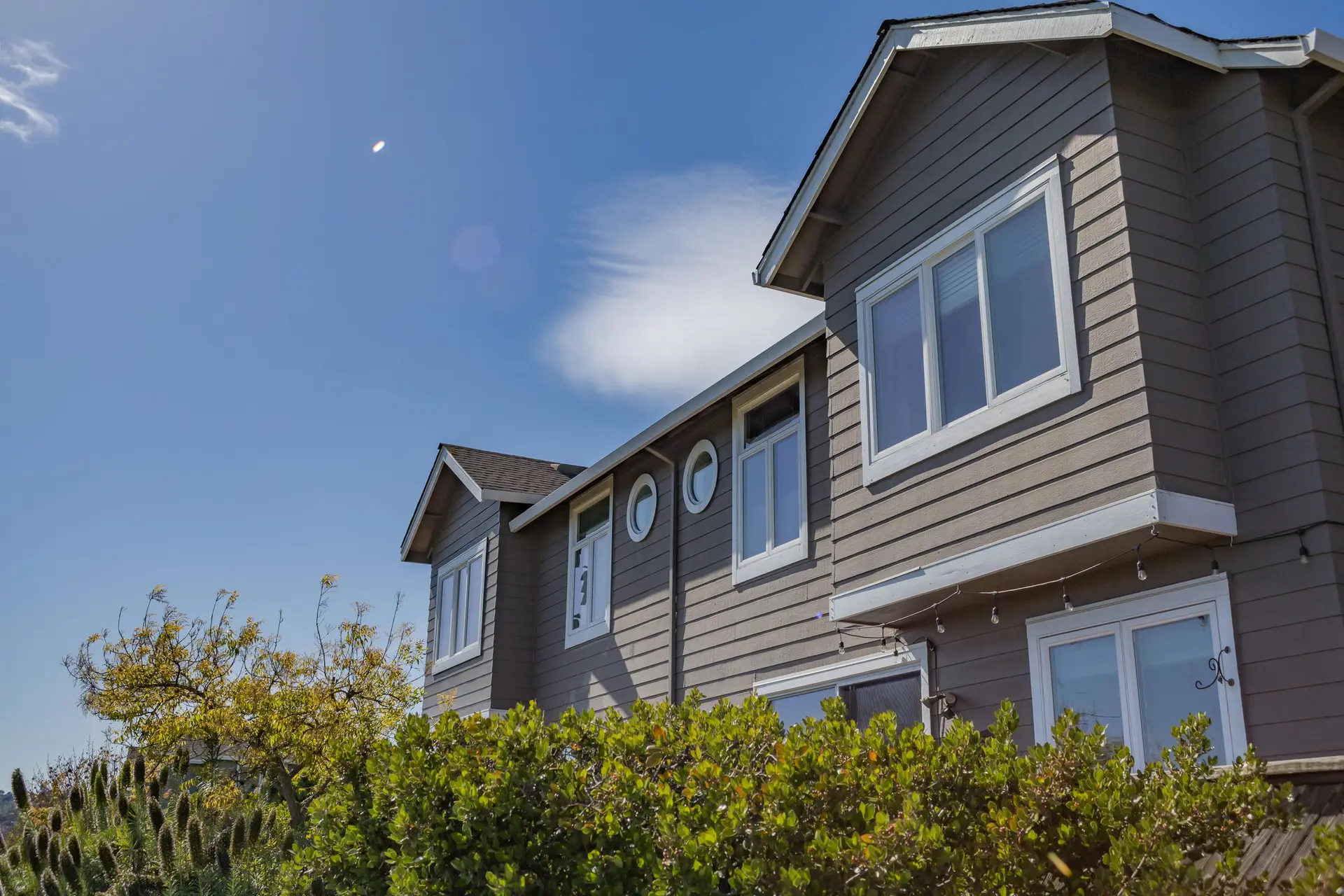
A siding contractor in Pasadena is rarely pricing boards alone. In fire country, the job is the whole wall from the framing out, and how it meets the windows, eaves and ground. Fernhill Builders installs fire-resistant siding and stucco on rebuilds and on standing houses, and we quote them as assemblies, so the fire-rated parts are on the page instead of being a surprise later.
Send the address and photos of the walls, or the elevations if you are rebuilding, and ask for a written cladding quote. We tell you what your parcel needs and price the wall layer by layer.
What we install
Each of these can meet the wildfire code when it goes on as the listed assembly. The code in force for your parcel decides what qualifies, and we check that with the building department before anything is ordered.
Fiber cement lap or panel siding. Generally rated noncombustible, it gives a board look without wood. Most of the labor sits in the joints, corners and trim.
Three-coat cement stucco. A noncombustible finish over lath and paper, familiar on houses all over the San Gabriel Valley. It relies on a sound weather barrier and good flashing.
One-coat stucco systems. Thinner and also noncombustible, but they count toward the code only as the specific listed system.
Fire-treated wood siding. Ignition resistant when listed, for owners who want real wood. We go over the listing and the upkeep it asks of you before you pick it.
Masonry or stone veneer. Noncombustible and heavy, which means the structure and foundation have to be designed for it.
Many of our jobs mix two, such as stucco on most walls with fiber cement on a gable. That works when each section meets the rules and the transitions are flashed and sealed. We steer owners away from untreated wood or vinyl in a fire area.
What sets the price
Wall area is only one of the numbers. These are the things that actually move a cladding quote.
- Material and system. Each option carries its own labor and material cost, and listed systems have to be installed exactly as tested.
- Tear-off or new wall. On a standing house, removing old siding can reveal rot, missing paper or gaps at the framing. On a rebuild, that line goes away.
- Layers behind the finish. Sheathing, weather barrier, lath and the base detail at the foundation are all part of what you are buying.
- Detail count. Corners, openings, trim, material changes and second-story walls add hours. A simple box costs less per foot than a house with many small walls.
- Eaves. Enclosing them with a noncombustible soffit at the top of the wall is often the most valuable extra on the job, and it has its own line.
- Access. Slopes, tight side yards and two-story walls need more staging.
If you have an insurance estimate on a rebuild, send it. We compare its wall line against ours, so you can see where they differ.
Rebuild or standing house: where the scope changes
On a rebuild, the numbers come from the drawings, and we prefer to be involved before the elevations are final. Choosing the cladding, the window flashing and the base detail once saves redrawing later. See our fire rebuild service for how the whole house is run.
On a standing house, the question is usually how much wall to replace. You may want one elevation at a time, starting with the side facing the slope or the neighbor. We can price it wall by wall, and we flag whether a partial job will leave a visible seam.
Openings on the same wall. Chapter 7A asks for multi-pane glazing with at least one tempered pane, or glass block, or a fire-rated assembly. Doors on outside walls carry their own rules. Replacing siding is the cheapest moment to change windows, because the flashing is already open. Our windows and doors work can go on the same contract.
Signs a wall is ready for replacement
These usually mean a repair will not hold for long, so they are worth raising when you book.
- Soft or swollen boards at the base of the wall.
- Stucco cracks with staining below them, or hollow-sounding patches.
- Old siding with no visible paper behind it at the edges.
- Gaps where the wall meets the foundation or the eaves.
- An insurer asking about your exterior materials.
How the visit and written quote work
Call or send the form to start. We walk each elevation, check the base of the wall and the eaves, open a small test area where it makes sense and measure.
The written scope lists the assembly layer by layer for each wall, along with the vents, eaves and openings that sit in it. You get a separate line for removal, patching and permits. On a phased job, every wall has its own total. More on the wall itself is on our stucco and exterior page.
What to have ready
- The address, in Pasadena or nearby in Altadena, South Pasadena or Alhambra.
- Photos of each side of the house, or the elevations for a rebuild.
- What is on the walls now, if you know.
- Your insurance estimate, if there is one.
- Which look you prefer, and whether you want to keep any existing wall.
Call us or send the form with the address. We measure the walls and send a written price for the assembly you choose.