
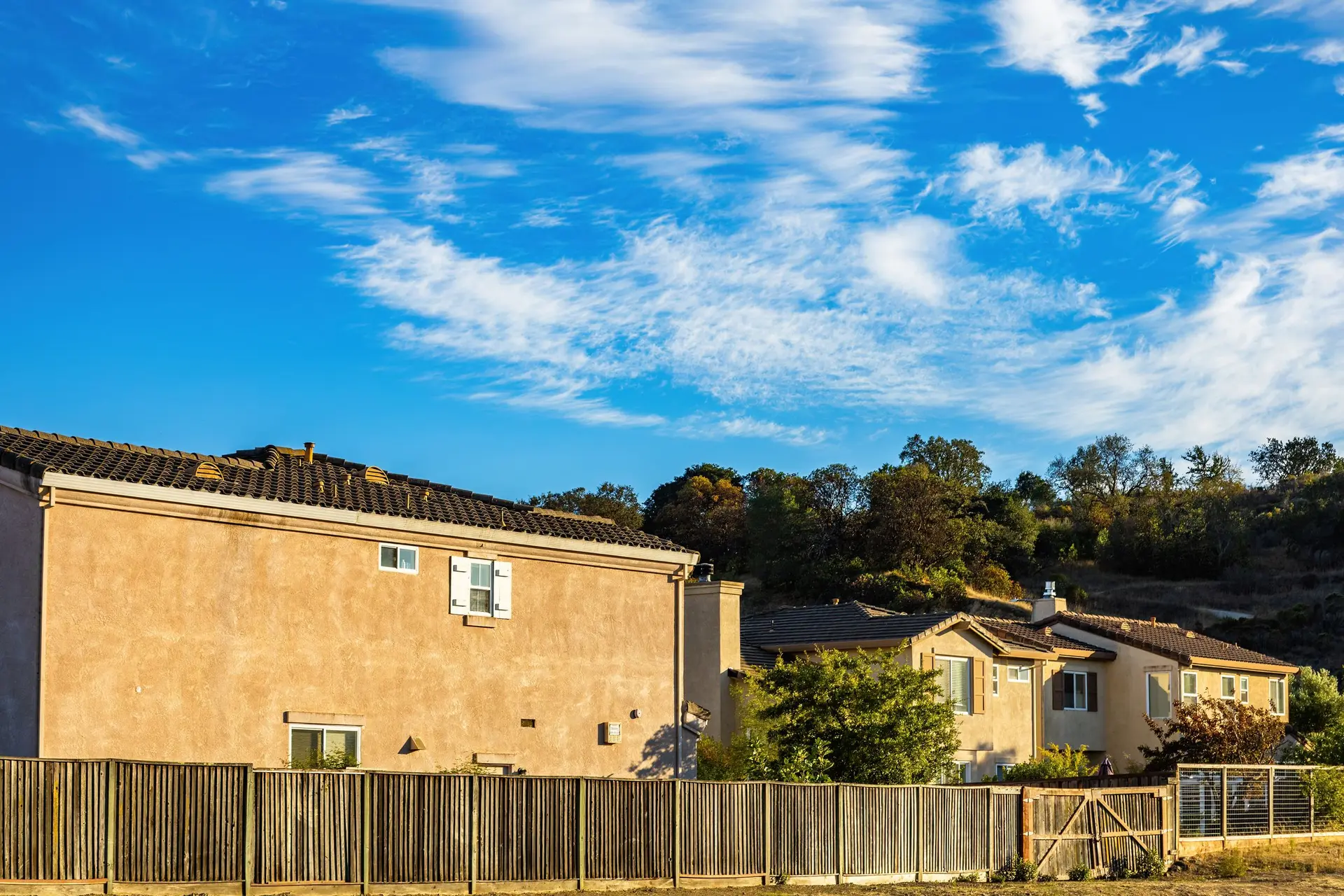
Stucco & Exterior Walls in Sylmar
Sylmar stucco begins with a test cut that shows whether older layers can take a recoat or overlay, or must come off before new lath and paper go on.
Cut a small window in a patched Sylmar wall and sometimes a second layer of stucco turns up, applied over the first. That finding does not decide the job alone. A tight old coat with sound paper behind it can take a recoat or a new lath-and-paper overlay, and a loose or wet one has to come off, so the cut and the sounding that follows set the scope.
Reading a layered wall
Sounding with a hammer handle maps the bond: a dull knock means the old layer has let go of what it was applied to, a ring means it is holding. A cut shows how thick the layers are and what lies behind them. If the existing coat is sound, firmly fastened and dry, new work can go over it as a recoat, or over fresh lath and paper fastened through into the framing. Where the old coat has delaminated, the stucco comes off in that area and the layers are rebuilt from the sheathing out.
What a mapped zone adds
Wildfire hazard mapping that covers a Sylmar lot may bring ember-resistance rules, and a sound stucco wall meets the covering part of them because cement plaster is noncombustible. The test then moves to the edges. The covering has to reach the roof line or eave enclosure, vents carry fine screening and gaps at trim and at the base are closed. Whatever the old layers allow, those edges are brought up to current rules, even where an older wall was never built to them.
Stucco & Exterior in Sylmar: common questions
Look at what the wall wears. Cement plaster, fiber cement siding and other listed products qualify, while untreated wood siding does not. The test applies to the exterior covering. Wood sheathing and framing behind any stucco wall are combustible, and the code accounts for that. What matters is that nothing lets embers around the covering.
A second coat does not force a strip. Sound, tight existing stucco can take a recoat or an overlay with new lath and paper. Strip when the old layers sound hollow, hold moisture or hide failed paper. A test cut at a patch shows which case the wall is, and the answer goes on the scope.
Open the base, clear away soil, mulch or concrete pressed against it and repair the plaster edge to land on the screed flange. Any wood in the gap, such as a fence post or a trim board running to the ground, is cut back or replaced, so the wall drains and nothing combustible touches its foot.
Stucco & Exterior in other cities
More work we do in Sylmar
Plan your project in Sylmar
Tell us about the house and the stucco & exterior work. We reply about a walk-through and a written scope.