
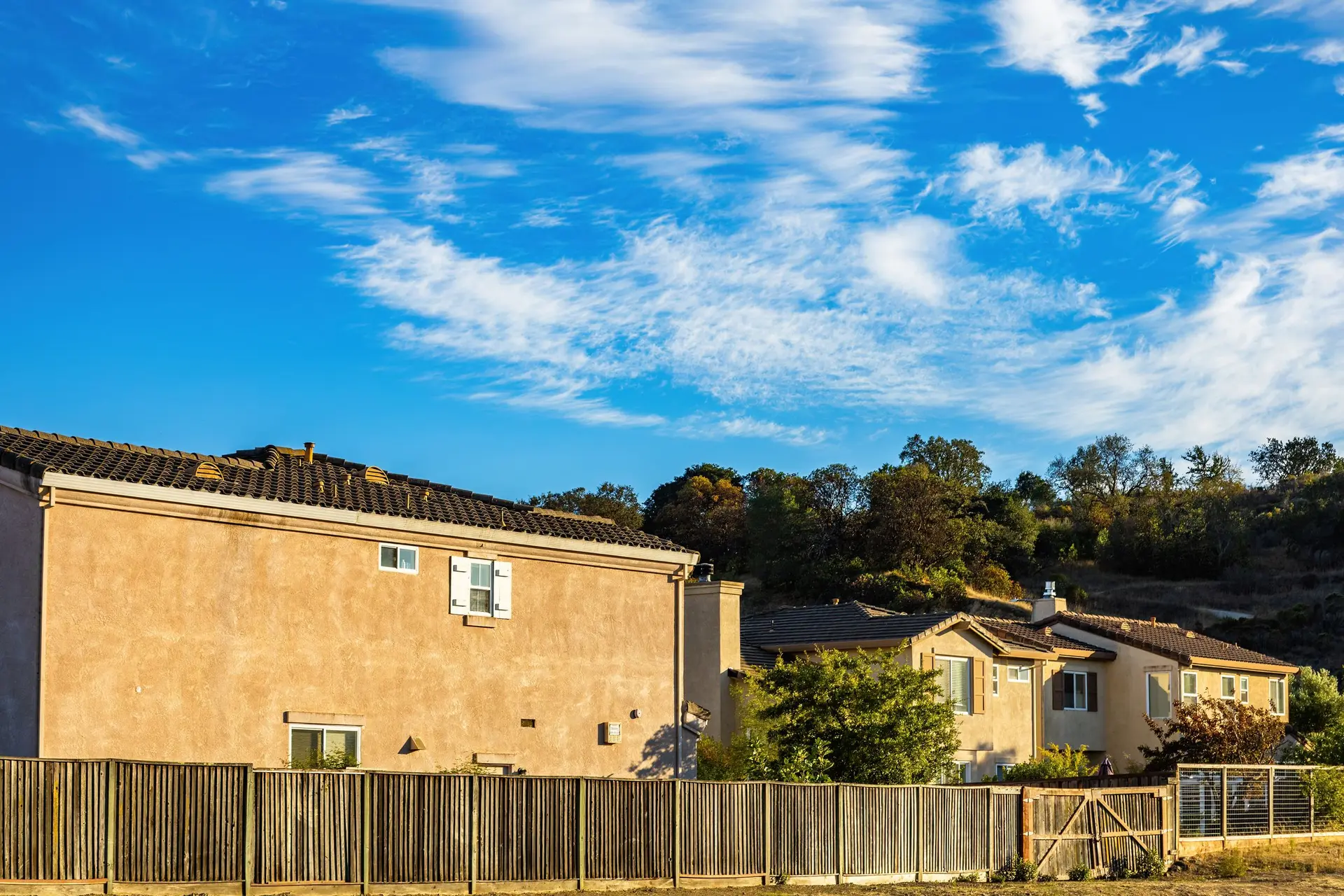
Stucco & Exterior Walls in San Pedro
The foundation line is the first place Fernhill Builders looks on a San Pedro stucco visit. Staining, rust and soil there decide what the repair must include.
Kneeling at the foundation line comes first on a San Pedro house. The bottom edge of the plaster, the metal screed and the first foot of wall tell the story of how water and the ground have treated the building. Staining, chalky white deposits, rust at the screed or a gap packed with soil each point to a different repair, and each is recorded before a scope is drafted.
Reading the lower wall
Soil, mulch and paving that touch the plaster keep it damp. Efflorescence, the white powder that moisture leaves on a surface, signals water moving through the wall. Rust on the screed or on exposed lath points to long contact with moisture, and where air carries salt it can run faster. A probe into the bottom plate shows whether the wood is still sound. These readings decide whether the wall is repaired in place or opened up. Each reading is marked on the wall surface so the repair line can be drawn with confidence.
Then the openings and eaves
From the base we move up to window and door edges, looking for hairline cracks that start at the corners and for sealant that has pulled away from frames. Under the eaves we check fascia, trim and each ventilation opening. Attic and foundation vents are checked for damaged mesh, and exhaust terminations are checked for working dampers and a tight seal at the wall. Anything that lets water or embers in goes onto the list. The sweep ends at the roof edge, where gutters and flashings that touch the wall are looked at too.
Stucco & Exterior in San Pedro: common questions
The walls the wildfire code recognizes are the noncombustible ones: stucco over galvanized lath and fiber cement boards. That code reaches only addresses inside mapped fire hazard zones, so the department reviewing a San Pedro lot can say whether it applies. Either build can still be chosen without the requirement, and the scope lists its layers.
Stable cracks on a solid, dry wall are repaired in place. Damp readings, hollow plaster or rusted lath mean the layers behind the finish have failed, so the wall is opened down to the sheathing. The probes taken along the lower wall at the first visit usually point toward one answer or the other.
At the base, plaster stops at a metal screed set above the soil, with a slot for drainage. Making the base safe means keeping that slot clear, which includes cutting back planting, lowering soil and moving mulch away. Damp and salt build up along the base, so a clear band lets the wall dry.
Stucco & Exterior in other cities
More work we do in San Pedro
Plan your project in San Pedro
Tell us about the house and the stucco & exterior work. We reply about a walk-through and a written scope.