
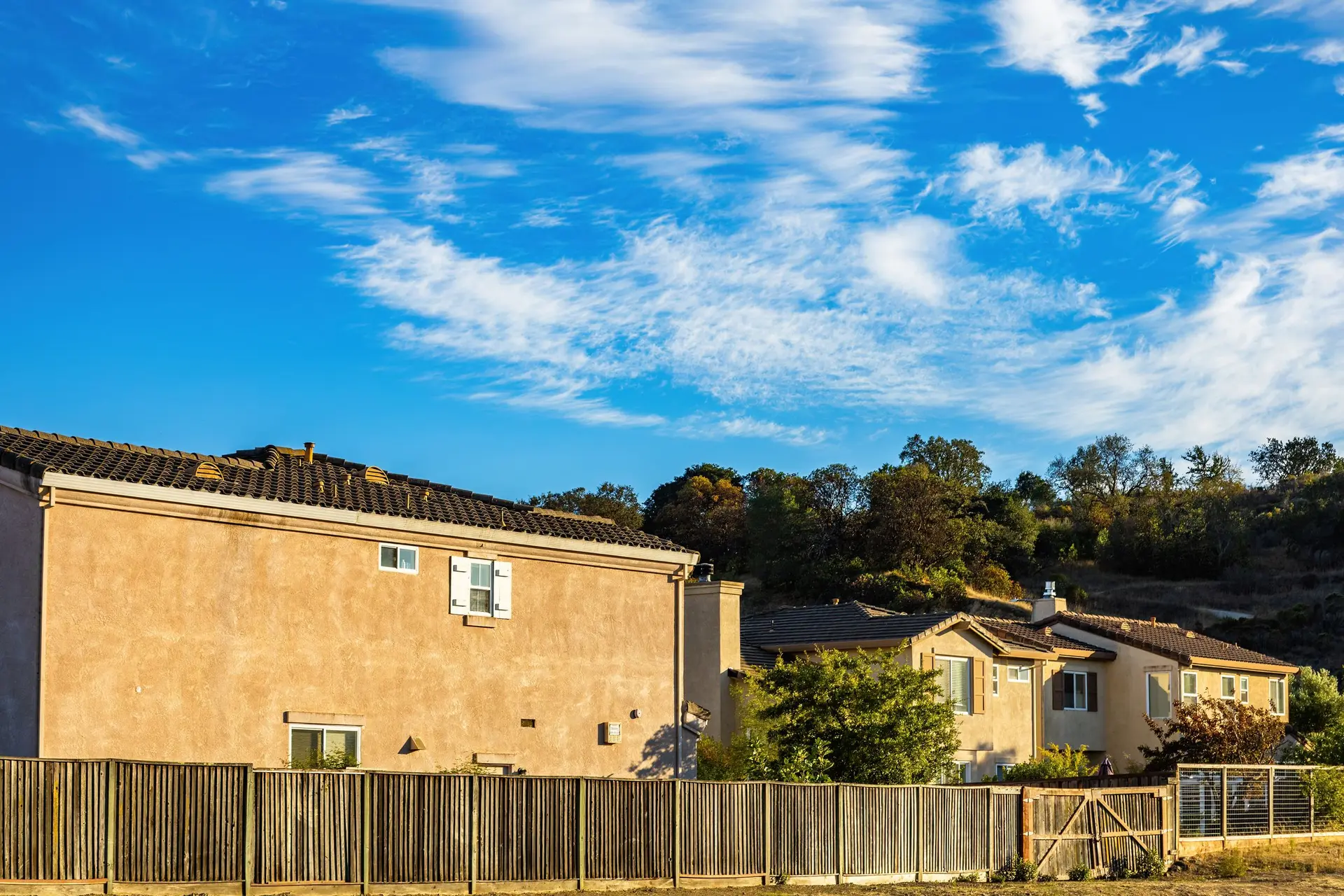
Stucco & Exterior Walls in Topanga
Topanga stucco jobs start high and low: eave bays and vents where embers get in, and the base of the wall where water and combustibles gather.
Before a Topanga stucco job is priced, the first look goes to the top and the bottom of the wall, since both edges are where the building code and weather meet. Up high are open rafter bays and oversized vents. Down low are a buried screed and combustible items against the plaster. The cracks and patches on the face of the wall come after.
Eaves, vents and rafter bays
Embers ride the wind and enter through openings. An open eave bay, a vent with a coarse screen or an opening larger than its screening allows will each let them in. The check is plain: look up under the overhang, measure vent openings against the screening size the code allows, and see whether the wall covering ends at solid blocking or at a void. Findings go on the scope together with the fix, such as closing the bay or fitting a rated vent.
The foot of the wall
Here the question is water and contact. The screed flange has to stand clear of soil and paving so water can drain, and the code sets minimum clearances for that. Separately, anything combustible resting against the base, such as stacked wood, a fence or mulch, is a fire exposure of its own, and it is listed on the scope with the step that removes it. Topanga is an unincorporated community, so the county building department is the office that reviews a permit when one is required.
Stucco & Exterior in Topanga: common questions
Cement plaster on lath, or fiber cement siding with a listing, counts. The covering has to continue up to the eave line, and the eaves, vents and windows that interrupt it are held to their own requirements. In a mapped hazard area those edge details are what a reviewer studies longest.
A cut at the worst spot answers it. Firm plaster, dry paper and hairline cracks take a patch. Hollow sound, staining or soft framing mean the area is stripped to the sheathing and rebuilt. A section left half-sound makes a poor base for new coats.
Start by uncovering the screed, then clear what touches the wall: soil, mulch, planter edges and stored lumber. The plaster is repaired to finish on the flange, leaving the drainage line open. A strip of gravel or pavers along the foot keeps that zone clean and noncombustible.
Stucco & Exterior in other cities
More work we do in Topanga
Plan your project in Topanga
Tell us about the house and the stucco & exterior work. We reply about a walk-through and a written scope.