
Stucco & Exterior Repair in Woodland Hills
Stucco repair in Woodland Hills starts at the roof edge, where water collects, then moves down past window heads to the screed before a quote is written.
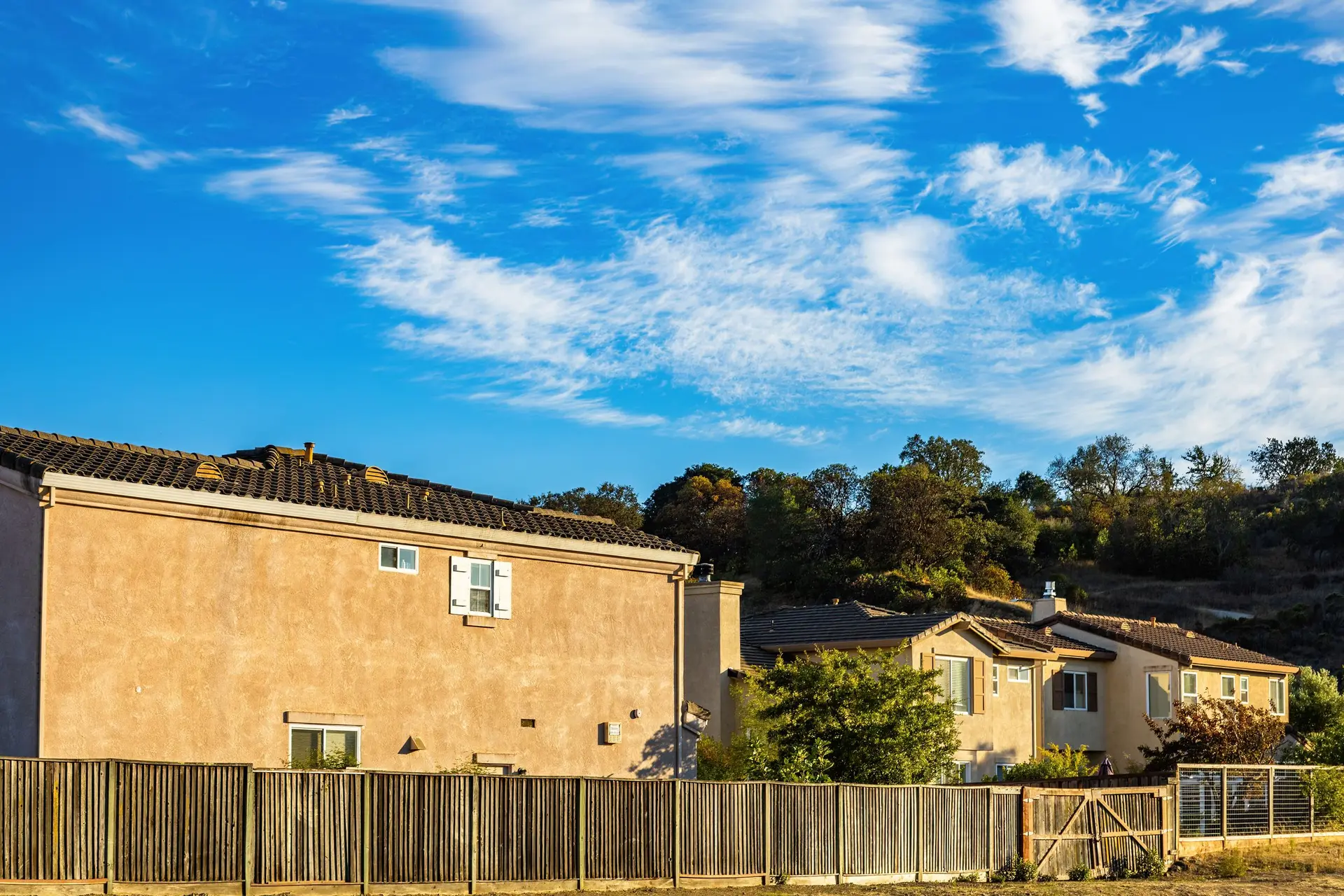
A ladder goes up before anything else on a Woodland Hills wall, to reach the spot where a roof edge lands against the plaster. Stains, soft spots and a missing kick-out flashing show up there before they do at eye level. What that junction looks like decides how the rest of the survey is read and where the first test opening is cut.
Reading the roofline junction
Look for dark streaks running down from the corner of a lower roof, plaster that sounds dull when tapped, and a gutter that ends short of the wall. Each is a sign of water working behind the finish. A probe at the junction tells how far it has gone. Dry framing means the repair can stay small, and damp or soft wood means the section must come off. The readings taken there go into the scope as its starting point, so later findings can be compared with them.
From the roof down to the screed
Next the survey drops to the heads of windows and doors, where flashing should lap over the frame, then to the sills, then to anything bolted to the wall such as lights and hose bibs. The last stop is the base: the height of the screed above soil, the condition of the lath in the bottom course, and any planter or soil touching the plaster. Ending at the ground gives a full map of where water enters and where it should leave, and the quote follows that map line by line.
About our Stucco & Exterior serviceServices in Woodland Hills
Stucco & Exterior in Woodland Hills: common questions
The state wildfire chapter applies to parcels inside mapped fire hazard areas, and the building department can confirm whether an address falls in one. A noncombustible wall is available either way. Cement plaster over lath qualifies on its own, and the scope lists the layers so a Woodland Hills lot can meet the standard whether or not it is required.
Dull or hollow sounds over a broad area, damp readings at the roof junction, or a stain that returns after repainting all point to stripping the affected section. Isolated hairline cracks over dry sheathing do not. The test opening at the roofline junction is usually the deciding look, because that is where water collects first.
At the foundation line the plaster ends on a weep screed with clearance above soil and above paving, and the paper laps over its flange. If a planter box or raised bed holds soil against the wall, the plaster is cut back and the soil lowered or the bed moved. The gap closes at the screed, and drainage stays open.
Stucco & Exterior in other cities
More work we do in Woodland Hills
Plan your project in Woodland Hills
Tell us about the house and the stucco & exterior work. We reply about a walk-through and a written scope.