
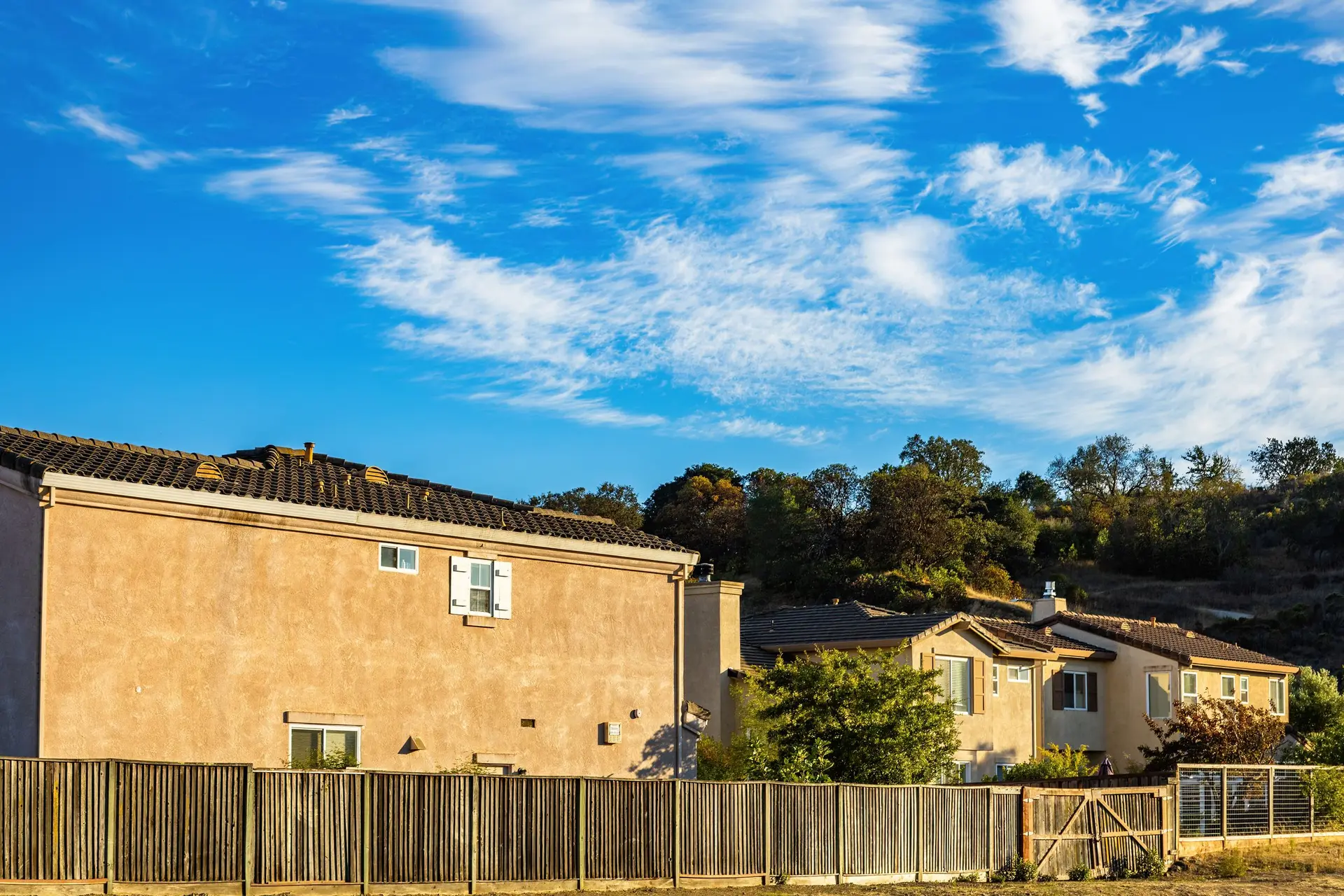
Stucco & Exterior Walls in Walnut
A Walnut stucco wall should need no attention. Fernhill Builders scopes finish, joints and base so the wall behaves from the first day.
A good Walnut stucco wall is the kind nobody has to think about: the paint holds, the gutters stay off it, the sprinklers miss it and the slot at the bottom stays open. Fernhill Builders writes the scope around those everyday conditions, so the layers, finish and trim are picked for how the wall will behave once the work is done.
What the wall lives with
Overspray from sprinklers, splash from downspouts and a hose bib dripping inside the wall are the quiet threats. Aiming heads away and tying downspouts into drains takes care of two. A sealed, flanged hose bib handles the third. Paint is chosen to let vapor out as well as shed water, because a tight film can trap moisture. The base gets a clear slot and a strip of bare ground. Gutters are checked for slope and cleared, because an overflowing one soaks a single stretch of wall again and again. The scope lists each of these habits as a line item to be set up once.
Built to be maintained
Control joints sit where plaster wants to move, at opening corners and along long runs, so hairline cracking stays minor. The scope records the finish, texture and color, and a labeled sample stays with the file for future matching. Later, the wall should need a wash and a coat of paint, with nothing deeper. Where wood trim meets the plaster, a gap and a seal keep the joint dry. Painted caulk is used at those joints only, and the product is named so a repaint can use the same one.
Stucco & Exterior in Walnut: common questions
Walls of brick, block or stone qualify, as do sheet-metal siding, cement boards, plaster on lath and tested rated assemblies. Ember rules reach lots on the fire hazard map. Walnut's building department says whether a given lot is one, and eaves, vents and the base follow that answer.
Narrow cracks in plaster that stays bonded call for a patch. Stripping is for walls where a probe finds wet sheathing, crumbling paper or hollow panels. A strip also resets the drainage and drying layers, so the wall starts its second life with a working water path.
The plaster stops on a screed above the ground, which leaves a slot for water to escape. Beds and soil are cut back from the wall. A mineral fill goes into the foundation seam, and the slot is re-checked after the final coat to be sure paint has not sealed it.
Stucco & Exterior in other cities
More work we do in Walnut
Plan your project in Walnut
Tell us about the house and the stucco & exterior work. We reply about a walk-through and a written scope.